Leptin and weight loss: how the hunger hormone works, with Venus Factor
Leptin is the hormone your fat cells use to tell your brain how much energy you have stored. When that signal is clear, appetite and fat metabolism stay easier to manage; when it is dialled down — a state often called leptin resistance — hunger and stubborn fat can feel like they are working against you. This guide explains the hunger hormone in plain language and the habits that support healthy signaling.
Everything you need to know about leptin and weight, in one place.
- What leptin is
- A hormone from fat cells that signals the brain about stored energy and helps regulate appetite.
- The problem
- Leptin resistance means the brain hears the signal less, so it acts as if fuel is low even when it is not.
- Biggest levers
- Sleep, steady whole-food meals, movement and stress management support healthier signaling.
- Where nutrients fit
- Plant actives such as genistein, green tea and turmeric support a healthy routine — not a cure for any condition.
- Timeframe
- Sleep and stress habits help within days to weeks; body-composition change takes weeks to months, and results vary.
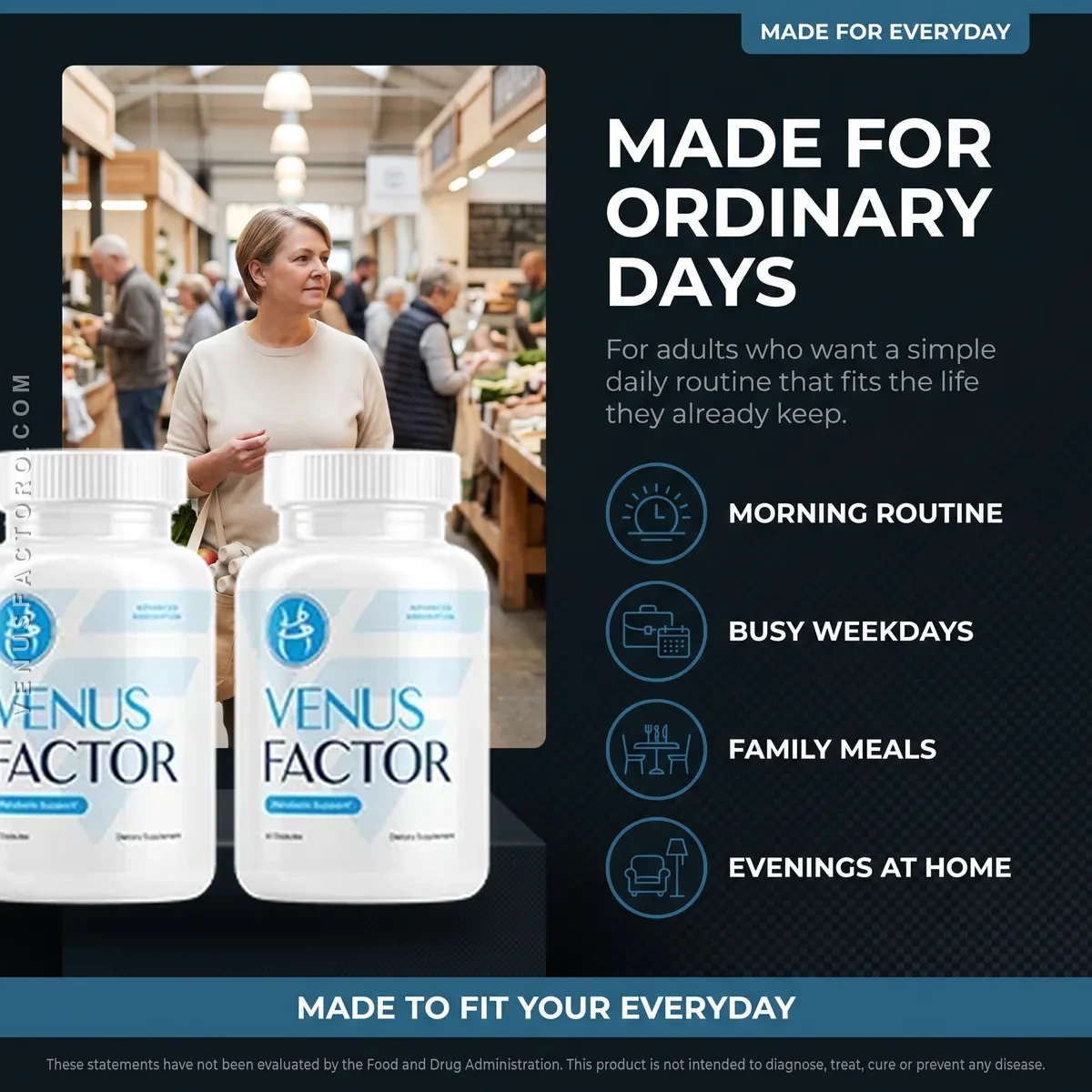
If you have ever felt hungrier the harder you diet, you have felt leptin in motion. Understanding it takes some of the frustration out of weight management — and points to habits that actually help. Below we walk through the science and show where a plant-based formula like Venus Factor, built around the leptin pathway, fits in.
What is leptin?
Leptin is a hormone produced mainly by your fat cells. Its job is to report to the brain — specifically the hypothalamus — on how much energy is stored as body fat. When stores are ample, leptin rises and the brain eases appetite and keeps energy expenditure up. When stores fall, leptin drops and the brain raises hunger to protect you. In short, leptin is the body’s fuel gauge, and it evolved to keep you from starving. Friedman, Leptin and the endocrine control of energy balance (Nature Metabolism, 2019), written by the researcher who discovered the hormone, sets out that role in detail.
What is leptin resistance?
Leptin resistance describes a state in which the brain becomes less responsive to leptin’s message. Even with plenty of leptin circulating, the brain behaves as if fuel is low — nudging up appetite and nudging down the drive to move. Researchers link it to factors such as chronic overconsumption of highly processed foods, poor sleep, chronic stress and inactivity. The processed-food part has a controlled human trial behind it: Hall and colleagues, Ultra-Processed Diets Cause Excess Calorie Intake and Weight Gain (Cell Metabolism, 2019) found people ate roughly 500 more calories a day on an ultra-processed menu than on a matched unprocessed one. The result is a frustrating loop where the body defends its fat stores.
This is one reason crash diets so often backfire: sharp calorie restriction lowers leptin quickly, which the brain reads as an emergency and answers with more hunger. Gentler, sustainable habits keep the signal steadier.
How does leptin affect weight loss?
Because leptin helps set both appetite and, to a degree, energy expenditure, healthy signaling makes a calorie-balanced lifestyle feel more natural — you feel satisfied on sensible portions and have the energy to move. When signaling is impaired, the same portions leave you hungrier and the same day leaves you more tired. None of this means weight is out of your hands; it means the habits that support leptin are worth prioritising.
| Leptin state | What the brain “hears” | Everyday effect |
|---|---|---|
| Healthy signaling | Plenty of stored energy | Appetite easier to manage; steadier energy. |
| Low leptin (crash diet) | Fuel is critically low | Rising hunger; body defends fat stores. |
| Leptin resistance | Fuel is low despite ample stores | Persistent hunger; lower drive to move. |
See how Venus Factor supports the leptin pathway →
How can you support healthy leptin signaling naturally?
1. Prioritise consistent sleep
Sleep is arguably the most direct lever. Short and irregular sleep is associated with disrupted appetite hormones, including leptin and its counterpart ghrelin: in a controlled study by Spiegel and colleagues, Sleep curtailment in healthy young men is associated with decreased leptin levels, elevated ghrelin levels, and increased hunger and appetite (Annals of Internal Medicine, 2004), four hours a night lowered leptin, raised ghrelin and increased hunger. Seven to nine hours on a regular schedule supports the system that keeps hunger honest.
2. Eat whole foods with protein and fibre
Highly processed, hyper-palatable foods are easy to overeat and are linked with poorer signaling over time. Whole foods rich in protein and fibre are more filling per calorie and support steadier appetite — see our best foods to support fat loss guide.
3. Move regularly and manage stress
Regular activity supports insulin and leptin sensitivity, while chronic stress and elevated cortisol work against them. You do not need extreme workouts — daily walking, some strength work and simple stress relief go a long way, and our guide to boosting female metabolism naturally after 40 breaks down exactly how much of each is worth doing.
4. Avoid extreme crash diets
Because very low intake drops leptin fast, sustainable deficits generally beat extreme ones for keeping the signal steady and the results lasting.

Where do plant nutrients fit in?
No supplement treats or cures leptin resistance, and Venus Factor makes no such claim. What plant nutrients can do is support a healthy routine, and the honest size of that effect is small: a meta-analysis of randomised trials in postmenopausal women by Glisic and colleagues, Phytoestrogen supplementation and body composition in postmenopausal women (Maturitas, 2018) found phytoestrogen supplementation was associated with only modest changes in body composition. The Venus Factor formula is built around four studied actives.
| Active | Category | General / traditional role |
|---|---|---|
| Genistein | Isoflavone | Studied for metabolic and hormonal wellness in women. |
| Arctic lingonberry | Polyphenol berry | Explored for supporting healthy metabolism and antioxidant status. |
| Himalayan turmeric | Curcuminoid | A traditional wellness herb researched for antioxidant support. |
| Green tea | Catechin source | Studied for general thermogenic and metabolic wellness. |
Support the leptin pathway daily
Venus Factor is a once-daily capsule pairing genistein, arctic lingonberry, turmeric and green tea. The six-bottle bundle is the best value at $49 per bottle, with free U.S. shipping and a 60-day guarantee.
Order Venus Factor — from $49/bottleA simple daily checklist
- Protect a consistent bedtime for 7–9 hours of sleep.
- Anchor meals in protein and fibre from whole foods.
- Walk daily and add two short strength sessions a week.
- Skip extreme crash diets in favour of a gentle, steady deficit.
- Manage stress with a walk, breathing or time outdoors.
- Take Venus Factor once a day with water, consistently.
When should you talk to a doctor?
Everyday habits support healthy signaling; they are not a replacement for medical care. Speak with your doctor if you are pregnant or nursing, under 18, take any medication, have a diagnosed condition, or notice unexplained weight change, persistent fatigue or unusual hunger. A quick conversation ensures anything you add fits safely with your care.
Frequently asked questions
What is leptin?
Leptin is a hormone made mainly by fat cells that signals the brain about the body’s energy stores. When leptin is working well, it helps regulate appetite and fat metabolism, telling the brain there is enough fuel on board.
What is leptin resistance?
Leptin resistance is when the brain responds less to leptin’s signal, so it behaves as if fuel is low even when fat stores are ample. This can make appetite feel harder to manage and everyday fat-burning less efficient.
How can I support healthy leptin signaling naturally?
Consistent sleep, regular movement, whole foods with fibre and protein, managing stress and avoiding extreme crash diets all support healthy leptin signaling. Certain plant nutrients are also studied for general metabolic wellness.
Does leptin cause weight gain?
Leptin itself does not cause weight gain; it is part of the system that regulates appetite and energy. Reduced sensitivity to leptin’s signal, alongside diet and lifestyle, can make weight management harder over time.
Do supplements fix leptin resistance?
No supplement treats or cures leptin resistance, and that is not a claim Venus Factor makes. Plant nutrients such as genistein, green tea and turmeric are studied for general metabolic wellness and support a healthy routine.
How long does it take to support leptin signaling?
Sleep and stress habits can help within days to weeks, while broader changes in body composition and routine usually show over several weeks to a few months. Individual results vary.
Try Venus Factor risk-free for 60 days →
Venus Factor is a dietary supplement, not a treatment for any medical condition. These statements have not been evaluated by the Food and Drug Administration. This product is not intended to diagnose, treat, cure or prevent any disease. Always consult a qualified healthcare professional about your individual needs.
References & further reading
- Friedman JM. Leptin and the endocrine control of energy balance. Nature Metabolism, 2019. PMID 32694767
- Spiegel K, Tasali E, et al. Brief communication: Sleep curtailment in healthy young men is associated with decreased leptin levels, elevated ghrelin levels, and increased hunger and appetite. Annals of Internal Medicine, 2004. PMID 15583226
- National Center for Complementary and Integrative Health (NCCIH). Soy. nccih.nih.gov/health/soy
- National Center for Complementary and Integrative Health (NCCIH). Green Tea. nccih.nih.gov/health/green-tea
- National Institutes of Health, Office of Dietary Supplements. Dietary Supplements for Weight Loss. ods.od.nih.gov/factsheets/WeightLoss-HealthProfessional
- Hall KD, Ayuketah A, et al. Ultra-Processed Diets Cause Excess Calorie Intake and Weight Gain: An Inpatient Randomized Controlled Trial of Ad Libitum Food Intake. Cell Metabolism, 2019. PMID 31269427
- Glisic M, Kastrati N, et al. Phytoestrogen supplementation and body composition in postmenopausal women: A systematic review and meta-analysis of randomized controlled trials. Maturitas, 2018. PMID 30049351
These references describe the ingredients and mechanisms in general terms and do not constitute evidence that any product treats, cures or prevents any condition.
Keep reading: how to boost female metabolism naturally · best foods to support fat loss · back to the Venus Factor blog · homepage.